
A Homeowner’s Guide to Navigating a Renovation From Start to Finish
A home renovation is a structured process that turns an existing house into a space that better fits how you live today. For homeowners, the experience can feel exciting one moment and overwhelming the next, especially when timelines, budgets, and daily routines collide. Knowing what typically happens, and when, makes the entire journey more predictable and far less stressful.
Key Insights
Clear planning decisions upfront reduce delays and budget surprises later.
Renovations follow a general sequence, even when projects differ in size.
Disruptions to daily life are normal, but manageable with preparation.
Communication with contractors is as important as the materials you choose.
From Idea to Action
Every renovation moves through a few essential stages. It usually begins with defining goals, such as improving functionality, updating style, or increasing home value. Once goals are set, design decisions, budgeting, and contractor selection come next, followed by permitting and scheduling.
Construction is the most visible phase and often the most disruptive. Demolition, structural work, and system updates happen before finishes like flooring, cabinets, and paint. The project wraps with inspections, punch-list fixes, and a final cleanup that signals the space is ready to use.
Common Challenges That Catch Homeowners Off Guard
Renovations rarely move forward without a few surprises. Hidden issues behind walls, such as outdated wiring or water damage, can add time and cost. Material delays are also common, especially for custom items or specialty finishes.
Another challenge is decision fatigue. Making dozens of small choices while living around construction can wear you down. Understanding that these moments are normal helps you respond calmly rather than react emotionally.
Staying On Track
Use the following steps to keep the project organized and reduce friction throughout the process:
Define renovation goals and a realistic budget range.
Hire licensed professionals with clear contracts and timelines.
Finalize design choices before construction begins.
Plan temporary living adjustments if key areas are unusable.
Schedule regular check-ins with your contractor.
Reserve a contingency fund for unexpected repairs.
Setting Expectation for Time and Disruption
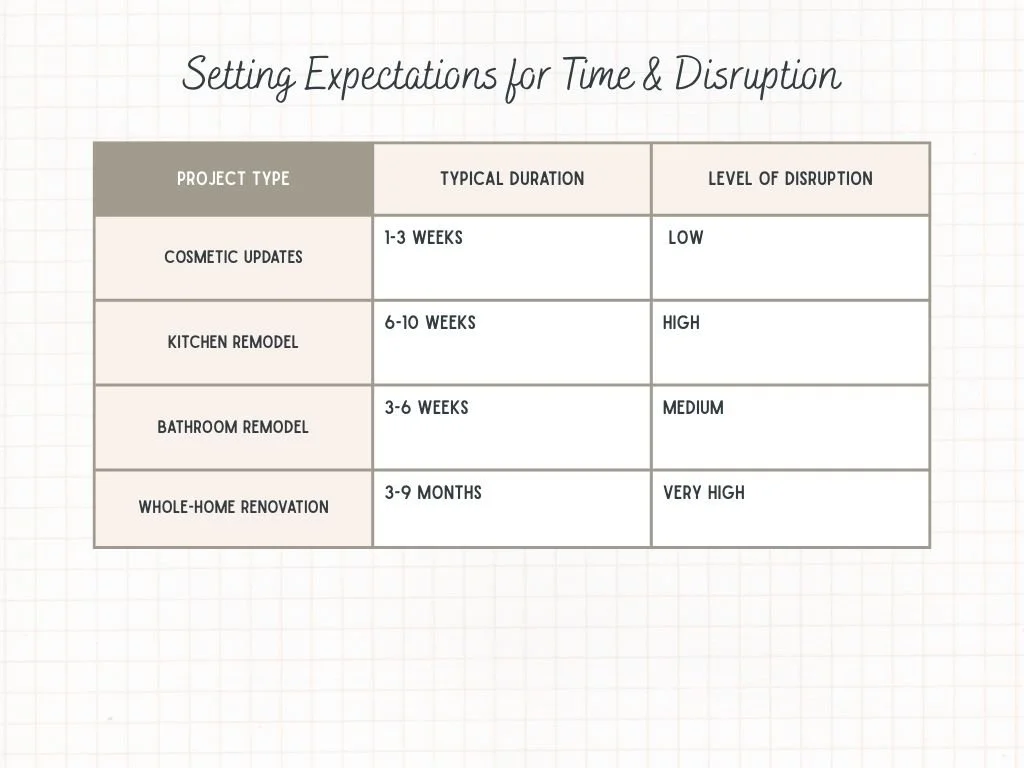
Renovation timelines vary widely depending on scope. A bathroom update may take weeks, while a full-home remodel can stretch across months. Noise, dust, and limited access to rooms are part of the process, so planning daily routines in advance is essential.
The table below outlines how different project types typically affect daily life.
Investing in Home Warranty Protection After the Remodel
Once the dust settles and renovations are complete, many homeowners shift their focus to protecting what they’ve just invested in. New appliances and upgraded systems often work flawlessly at first, but breakdowns can still happen without warning. This is where evaluating a home warranty can make sense, especially if you want help covering repairs to major systems and appliances. A warranty is typically renewed yearly and offers a structured way to manage unexpected repair costs rather than paying fully out of pocket. Click here for more info about investing in a home warranty.
Smart Communication Makes Everything Easier
Clear communication is the glue that holds a renovation together. Agree on how updates will be shared, whether through weekly meetings, messages, or progress photos. Address small concerns early, before they grow into larger problems.
Document changes in writing, even if they seem minor. This habit keeps everyone aligned and reduces misunderstandings about costs, scope, or timelines.
FAQs for Homeowners
Before wrapping up, here are answers to question homeowners commonly raise about renovations.
-
Living in your home is possible for smaller projects, but major renovations can be exhausting. Dust, noise, and limited access to kitchens or bathrooms can disrupt daily routines. Many homeowners choose short-term housing during the most intense phases.
-
A contingency fund of 10–20 percent of the project cost is common. Older homes may require an even larger buffer due to hidden issues. This extra cushion helps you make decisions without panic.
-
Reliable contractors are licensed, insured, and transparent with estimates. They provide references and clear contracts outlining scope and timelines. Trust is built through consistent communication and follow-through.
-
Delays are common and often caused by inspections, materials, or unforeseen repairs. Ask for revised schedules and clear explanations when changes occur. Flexibility paired with accountability keeps things moving.
-
Yes, renovation fatigue is very real. Decision overload and disruption can make even exciting projects feel draining. Taking breaks from decision-making and leaning on professionals helps.
-
A renovation is complete after final inspections, walkthroughs, and punch-list items are resolved. Only then should final payments be made. This stage ensures the work meets agreed standards.
Bringing It All Together
A home renovation is a temporary disruption with long-term rewards when managed thoughtfully. Understanding the process, planning for challenges, and communicating clearly make a noticeable difference in how the experience feels. With realistic expectations and a steady approach, homeowners can move from uncertainty to confidence and fully enjoy the results of their newly transformed space.
Renovations involve dozens of decisions—many happening faster than expected. We created our Renovation Planner Guide to help homeowners track budgets, timelines, contractor communication, and design choices in one place. It’s the same framework we use to guide our own renovation clients.