
Starting Over in a New City: Practical Ways to Rebuild After a Hard Season
Starting fresh in a new city after a challenging period in life can feel like stepping onto a stage mid-scene: the lights are on, your lines aren’t memorized, and everyone seems to know where the exits are. The good news is that you don’t have to “solve your whole life” to begin again. You only need a few steady moves that rebuild safety, identity, and momentum—one ordinary day at a time.
The quick version you can read while unpacking
A new city won’t automatically fix what hurts, but it can give you clean edges: new routes, new faces, new rhythms. Start by stabilizing the basics (sleep, food, money, transportation), then widen your circle slowly through repeatable routines. Aim for “small and consistent” rather than “dramatic and perfect.” Your job is to make the unfamiliar feel navigable—then meaningful.
A routine that’s flexible (not fragile)
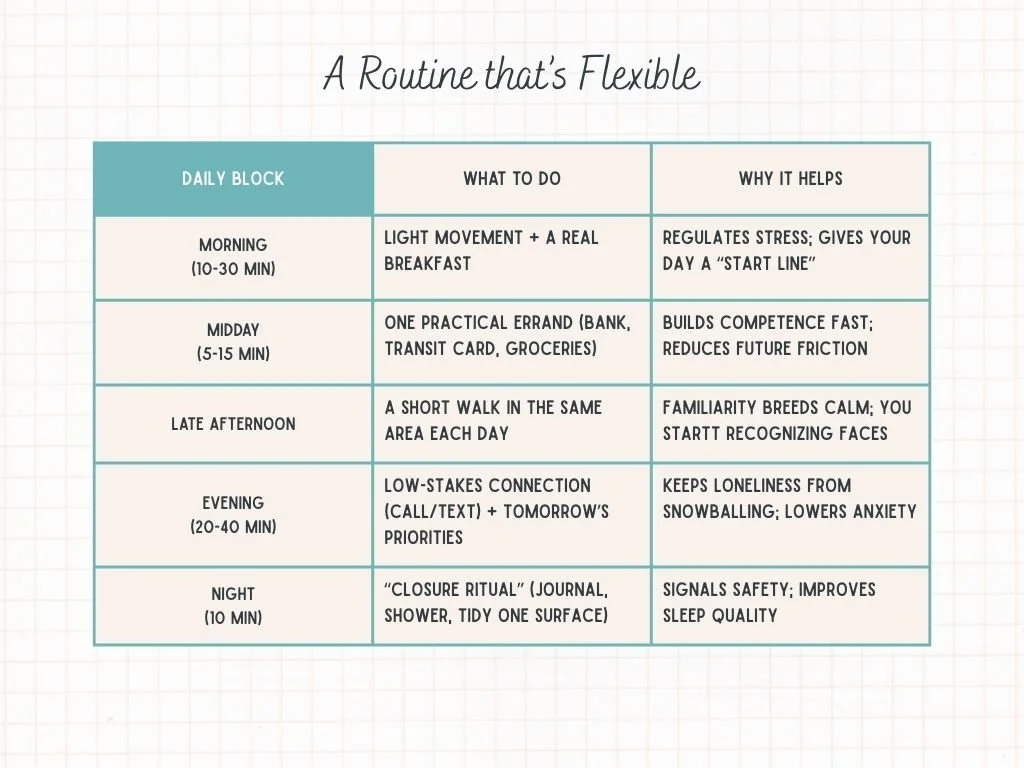
Quick Links:
Turn the move into career lift-off (if you want that chapter)
A fresh start is also a chance to realign your work life with who you are now, not who you were surviving as. If going back to school is part of your reset, online learning can make the transition smoother because you can keep working while building new credentials. Look for an array of accredited online programs that match your direction—maybe you want a bachelor’s in business to support entrepreneurship or business management. And because online programs are often designed for busy schedules, they can fit around a new job, a new commute, or the general chaos of rebuilding. If you’re exploring business pathways, you can learn more here.
The 14-day reset plan
Use this as a checklist, not a moral scorecard:
Day 1–2: Set up survival basics. Bedding, towels, chargers, a few groceries, and a clear spot to sit.
Day 3: Choose two “anchor locations.” A library and a park are excellent picks because they’re free and repeatable.
Day 4: Create a one-page budget snapshot. Rent, utilities, transit, food, debt—no judgment, just visibility.
Day 5: Pick a single daily non-negotiable. Example: a 15-minute walk or cooking one meal.
Day 6–7: Make one micro-connection. Say hello to a neighbor, attend a casual meetup, or chat with a barista.
Day 8: Do one thing “future you” will thank you for. Doctor/dentist appointment, paperwork, or setting up auto-pay.
Day 9–10: Choose one community lane. Fitness class, volunteering, faith community, hobby group—something that repeats weekly.
Day 11: Clean up a single area that irritates you. A cluttered corner can quietly drain you every day.
Day 12–13: Practice your new narrative. One sentence: “I moved here to reset and build something better.”
Day 14: Review what worked—keep only the essentials. If it’s not sustainable, it’s not a routine.
Tiny actions that compound (bulleted list)
● Keep the same bedtime and wake time five days a week.
● Learn one street name per walk; your brain loves “known territory.”
● Stock one “emergency meal” you can eat when you’re depleted.
● Put one recurring social touchpoint on your calendar (same day/time).
● Create a “comfort kit” drawer: tea, bandaids, a candle, headphones, snacks.
● Take photos of small wins (first meal cooked, first sunset spot, first friend). Proof matters.
Make your space match the new you
Your home is the first relationship you rebuild in a new city. Even if it’s temporary, shaping it with intention can reduce stress and boost confidence—because you’re sending yourself a daily message: “I live here. I’m allowed to feel okay here.” A DIY kit can be especially helpful when decision fatigue is high; it bundles options so you’re not doom-scrolling rugs at midnight. If you want a guided way to pull a room together (without reinventing your taste from scratch), the Jennie Leigh Designs design kit can be a handy starting point.
A resource that’s quietly excellent when you’re rebuilding
When your inner world is wobbly, it helps to have practical, research-informed exercises you can do in small bites. The Greater Good in Action library is a free collection of short practices (for things like gratitude, self-compassion, and resilience) that you can try without committing to a whole new identity. The best part is that many activities take only a few minutes, which matters when motivation is low. Treat it like a menu: sample two or three and keep what actually works for you.
FAQ
How do I stop feeling lonely when I don’t know anyone?
Aim for repetition over intensity. Go to the same places at the same times so familiarity can do its work, and add one weekly group activity to create “friendly regulars.”
What if I’m still grieving what happened before the move?
That’s normal. A new city is a change of scenery, not a memory wipe. Give yourself space to process—talk to a therapist if you can, or use journaling and grounding practices to avoid bottling it up.
How do I meet people without forcing it?
Choose environments with a built-in reason to talk: classes, volunteering, hobby groups, or coworking spaces. Shared activity removes the pressure to be instantly interesting.
I’m overwhelmed. What should I do first?
Stabilize basics: sleep, food, money visibility, and a simple daily rhythm. When those are steadier, everything else gets easier to tackle.
How long does it take to feel “settled”?
It varies, but many people notice meaningful improvement after a few weeks of consistent routines and a couple of recurring social touchpoints.
Conclusion
Starting over isn’t one brave moment—it’s a stack of small, repeatable choices that make your days feel safer and more yours. Focus on anchors, basics, and routines that can survive imperfect weeks. Let friendships and confidence arrive gradually, through repetition. And when you’re ready, use the clean slate to build a life that fits who you are now.