
Turning Your Home Into a Place that Nurtures Work and Rest
For millions of people now working remotely, home has become both the office and the refuge. But balancing these roles isn’t as simple as setting up a desk in the corner. It requires thoughtful design choices, behavioral boundaries, and environmental cues that help your brain shift gears between productivity and peace.
Quick Takeaways
When every room has to serve multiple purposes, zoning becomes your best friend. That doesn’t always mean walls or partitions; light, texture, and furniture orientation can all subtly define purpose. A small rug under your desk delineates your workspace, while ambient lighting by your sofa signals it’s time to unwind.
Before rearranging or buying anything, take stock of your current space. What corners feel distracting? What areas naturally draw you in? A little spatial awareness goes a long way. Here’s a quick guide to the types of adjustments worth prioritizing:
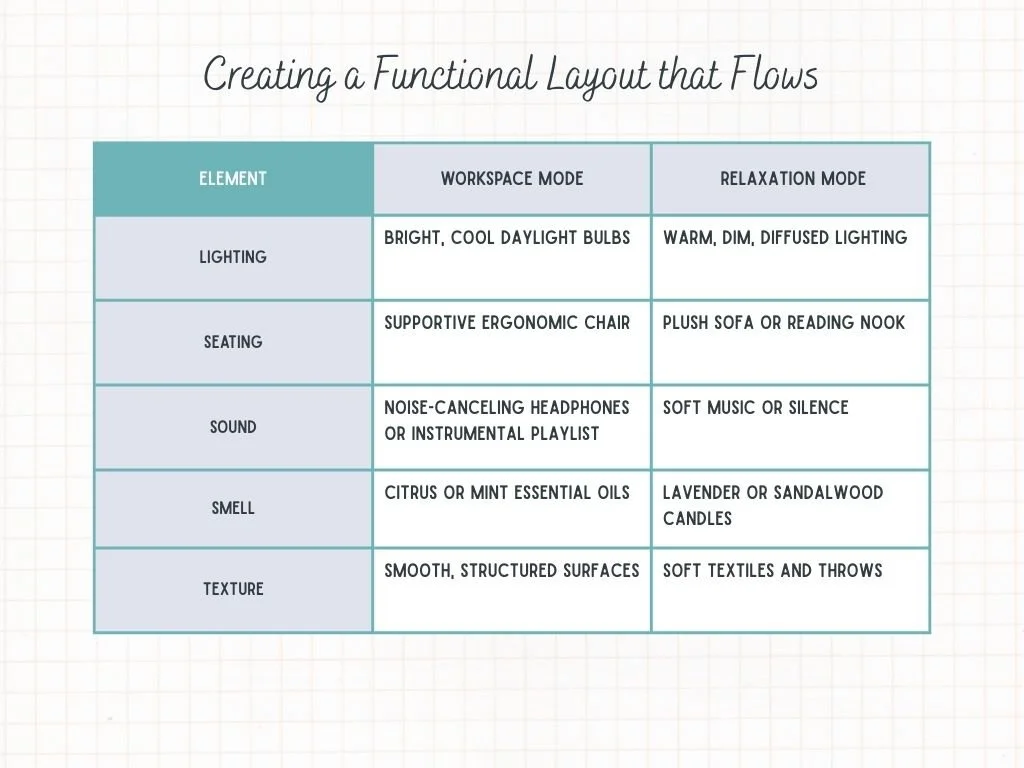
The key is contrast; clear sensory boundaries tell your mind what mode it’s in.
- Lighting Quick Link: https://www.bobvila.com/articles/home-office-lighting-tips/
- Seating Quick Link: https://www.flexispot.com/ergonomic-office-chair-oc3b
- Smell Quick Link: https://aromatherapynaturals.com/aromatherapy-hacks-for-home-office/
Small Changes That Deliver Big Impact
Even minimal changes can reset how your space feels throughout the day. Try switching out your desk background for a calming image after work, or using a foldable screen to hide work materials in the evening. Tiny rituals like closing your laptop, dimming lights, or lighting a candle can create psychological closure from the workday. Start with one or two; these require minimal cost but high payoff.
● Add a houseplant near your workspace to introduce a natural visual break.
● Use a dimmable lamp to transition from focus lighting to soft relaxation tones.
● Keep only work tools visible during the day; replace them with leisure objects at night.
● Separate digital environments: one browser profile for work, another for personal use.
● Introduce ambient scent cues tied to time-of-day transitions.
Reclaim Calm with Texture
One of the most effective, low-effort ways to visually and emotionally shift a room’s purpose is through textiles — especially pillows. They soften a structured environment, making it feel lived-in and restorative after long work hours. Swapping out pillow covers can instantly cue your brain to relax by introducing different colors, fabrics, and tactile sensations.
For example, you can try this pillow designer to create custom pillows using your own photos, colors, or design motifs. This tool lets you personalize a print that aligns with both your aesthetic and your workflow, creating a sense of ownership and emotional distinction between your workday setup and your evening retreat. The simple act of tossing a few custom cushions onto your sofa after work can signal a clear, sensory boundary between focus and rest.
Building Daily Structure That Feels Sustainable
Productivity isn’t just about furniture, it’s behavioral. The more predictable your environment, the easier it is for your brain to follow through on focus and relaxation cues. Here’s a short how-to checklist to structure your day around your dual-purpose space:
Follow these daily steps to maintain clarity and balance.
Start your morning in natural light, even five minutes near a window resets your circadian rhythm.
Define a “first task ritual” (like coffee + planning) that marks your entry into work mode.
Schedule a mid-day reset; a short walk or music change helps avoid cognitive fatigue.
Perform a closing ritual each evening: tidy workspace, adjust lighting, put away devices.
Reflect weekly: What spatial or sensory triggers helped or hindered your focus this week?
Integrate Work and Wellness Seamlessly
Your home should feel like a supportive ecosystem, not a battlefield between tasks and rest. One of the best approaches is to design around energy zones rather than rigid spaces. Morning light zones encourage alertness. Afternoon reading corners foster downtime. When aligned with your natural energy rhythms, your home becomes a living assistant to your workflow.
Frequently Asked Questions
How do I stay motivated when my workspace is also my living room?
Try treating the start of your workday like a commute. Change clothes, light a candle, or open a specific playlist before sitting down. Environmental cues like scent or sound signal the brain that something new is beginning, which boosts focus even without leaving home.
What’s the best way to reduce visual clutter when space is tight?
Invest in closed storage or baskets that hide supplies after hours. Even the simple act of clearing your desk surface reduces mental load. A clear visual field equals a calmer mental one — especially in compact apartments.
Can lighting really affect productivity that much?
Absolutely. Cooler white light supports focus by mimicking daylight, while warmer tones promote relaxation. Try programmable bulbs that shift automatically with time of day for seamless transitions.
How do I stop work stress from bleeding into my downtime?
Physical boundaries help, but so do mental ones. Use a shutdown routine: close your laptop, physically turn off notifications, and do something sensory like stretching or stepping outside. Repetition teaches your brain when work ends.
Is it worth customizing décor for both roles?
Yes, personalization deepens comfort and belonging. Items that bring joy (like art, pillows, or greenery) make transitions smoother because they re-anchor your attention in the present moment. Small details can shift your emotional state dramatically.
What if I share my space with others?
Communication and shared rituals help. Set “focus hours” and “quiet cues” that everyone agrees on. Co-designing these patterns reduces friction and maintains harmony across overlapping zones.
Conclusion
A home that functions as both office and sanctuary doesn’t happen by accident, it’s designed through awareness, intentional rituals, and small sensory distinctions. The goal isn’t perfection but fluidity: being able to move gracefully between focus and rest without friction. With the right cues, tools, and textures, your home can finally become what it’s meant to be, a space that works with you, not against you.