
Mixing & Matching: How to Combine Styles in Interior Design
The houses I love most aren't pulled from a single Pinterest board. They're collected — a little of one thing, a little of another, layered until the room feels like the people who live in it.
There's a quiet myth in interior design that you have to "pick a style." Modern. Farmhouse. Mid-century. Boho. As if you walk into a furniture showroom, point at one corner of the floor, and live there forever.
Real homes don't work that way. The most beautiful spaces I've ever seen — and the most beautiful spaces I've ever designed — are the ones that mix. A vintage rug under a modern sectional. An industrial pendant over a farmhouse table. A clean-lined sofa softened by a chair that clearly had a life before yours.
Mixing styles is what makes a room feel like a home instead of a catalog. But it's also where most people get stuck. Too much of one thing feels themed. Too much of everything feels chaotic. The trick is knowing what to repeat and what to contrast and that's what I want to walk you through today.
Why Mixed Styles Work Better Than “Matched” Ones
When everything in a room comes from the same era, the same finish, and the same vibe, the eye stops moving. It takes the room in once and gets bored. There's nothing to discover.
But when you mix — modern lines next to vintage texture, polished metal next to weathered wood — the eye keeps traveling. Every glance finds something new. The room breathes.
Designers call this visual tension. I call it the difference between a room you live in and a room you photograph and then never sit in again.
Mixed styles also age better. Trends come and go fast. A room built around one current trend will look dated in three years. A room built on a mix of old and new, polished and worn, simple and decorative — that room just looks collected. Collected never goes out of style.
The Rule That Holds It All Together: Common Threads
Here's the secret nobody tells you. You can mix almost any two styles successfully if you give them at least one thing in common.
That common thread is what stops a mixed room from feeling like a yard sale. It's the invisible line that ties everything together. The thread can be anything:
A repeated color - A modern sofa and a vintage chair will play nicely together if they share an undertone — both warm, both cool, or both grounded by the same neutral.
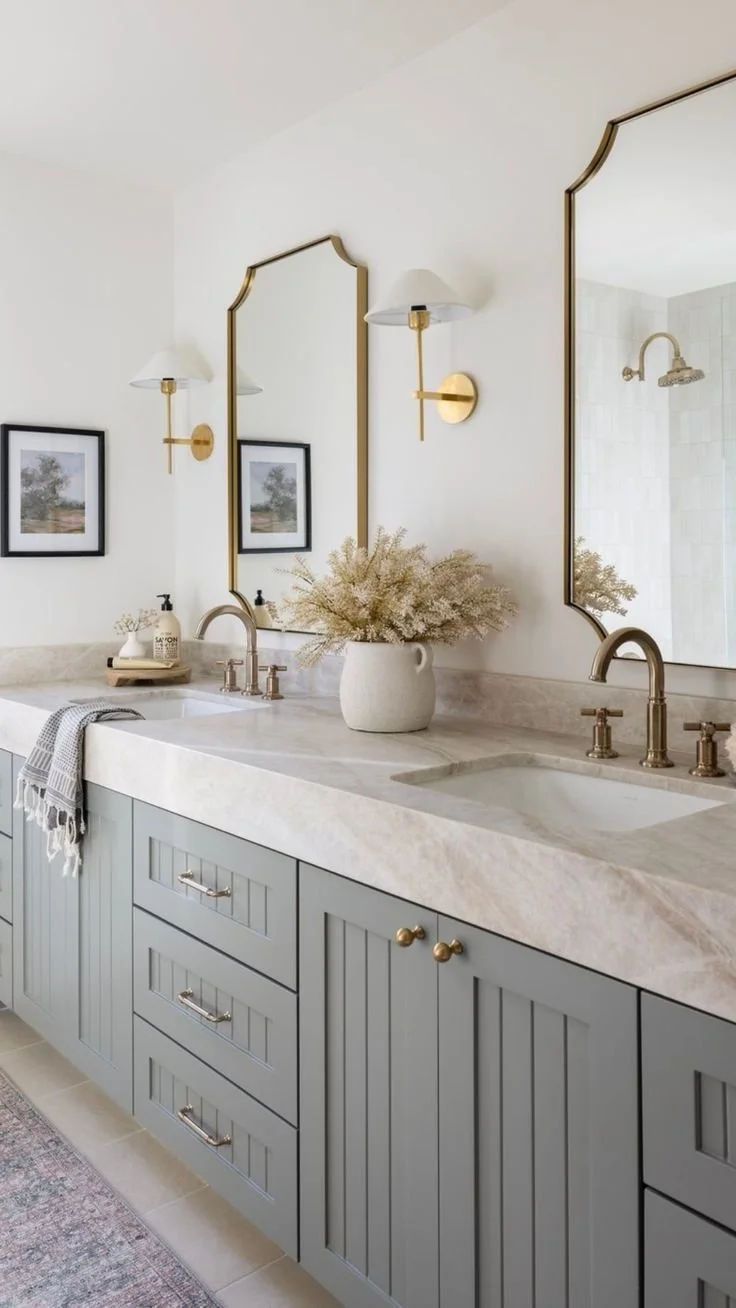
A repeated material - Brass on the lamp, brass on the cabinet pulls, brass on the picture frame. Even if every other element is different, the metal pulls the eye through.
A repeated shape - Curves on the sofa, curves on the mirror, curves on the coffee table. Or sharp edges everywhere. Pick one.
A repeated texture - Linen on the curtains, linen on the throw pillows, a nubby wool rug. Texture is the easiest thread to add and the hardest to notice consciously — which is exactly why it works.
You don't need all of these. You need one. One repeated element, used three or more times, will hold a mixed room together.
Five Style Combinations That Almost Always Work
Some pairings are easier to pull off than others. These are the ones I reach for most often when a client says they "love both" of two styles and aren't sure how to bridge them.
1. Modern + Vintage
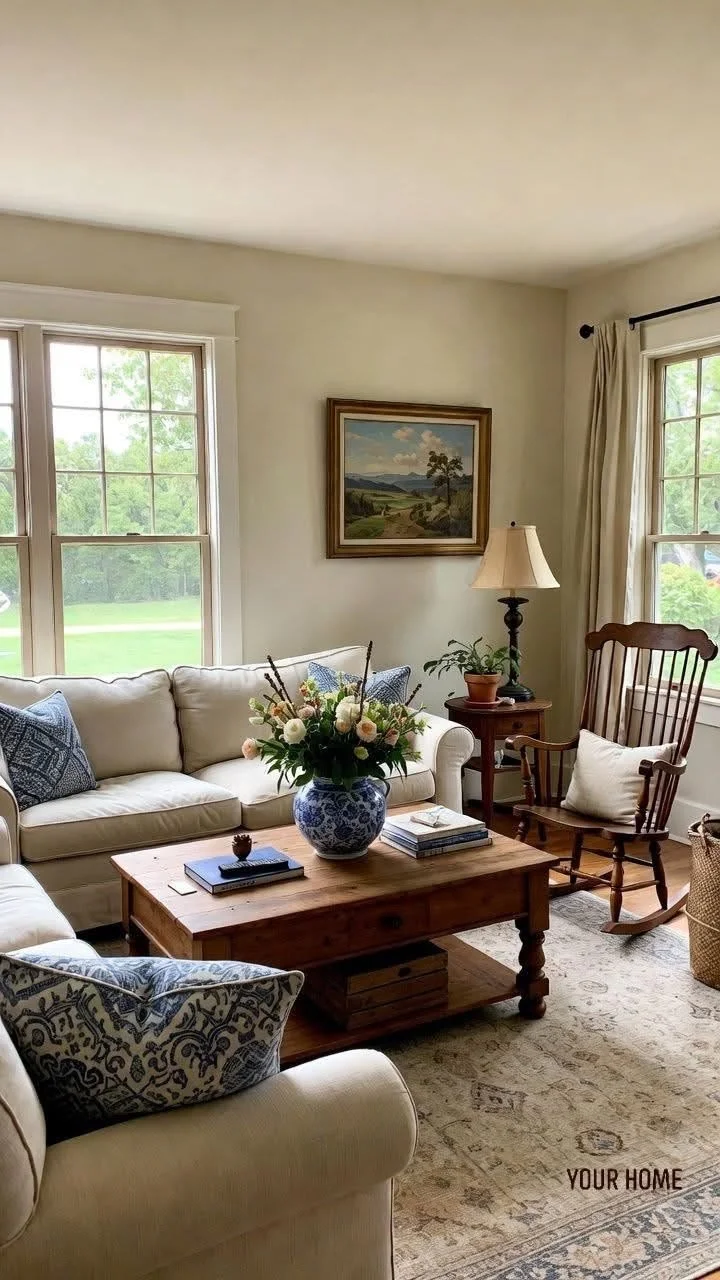
This is the easiest mix and the most forgiving. Modern furniture has clean lines and simple silhouettes — which means it gives vintage pieces room to be the star. Pair a sleek white sofa with a worn leather club chair. Hang a contemporary abstract painting over an antique console. Drop a centuries-old Persian rug under a glass coffee table.
The contrast between new and old is the visual tension. The common thread is usually scale — keep the proportions balanced so neither piece overwhelms the other.
2. Rustic + Industrial
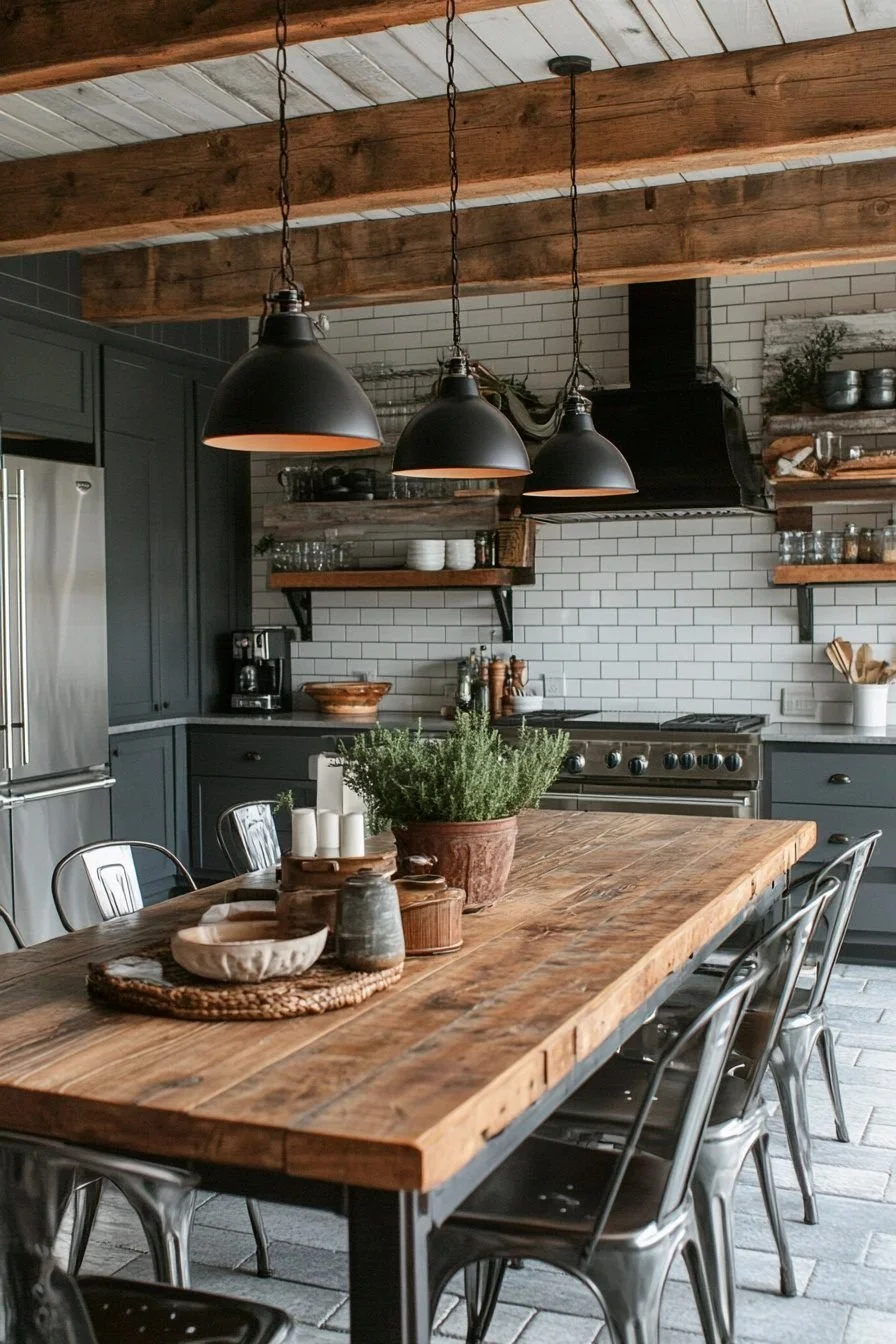
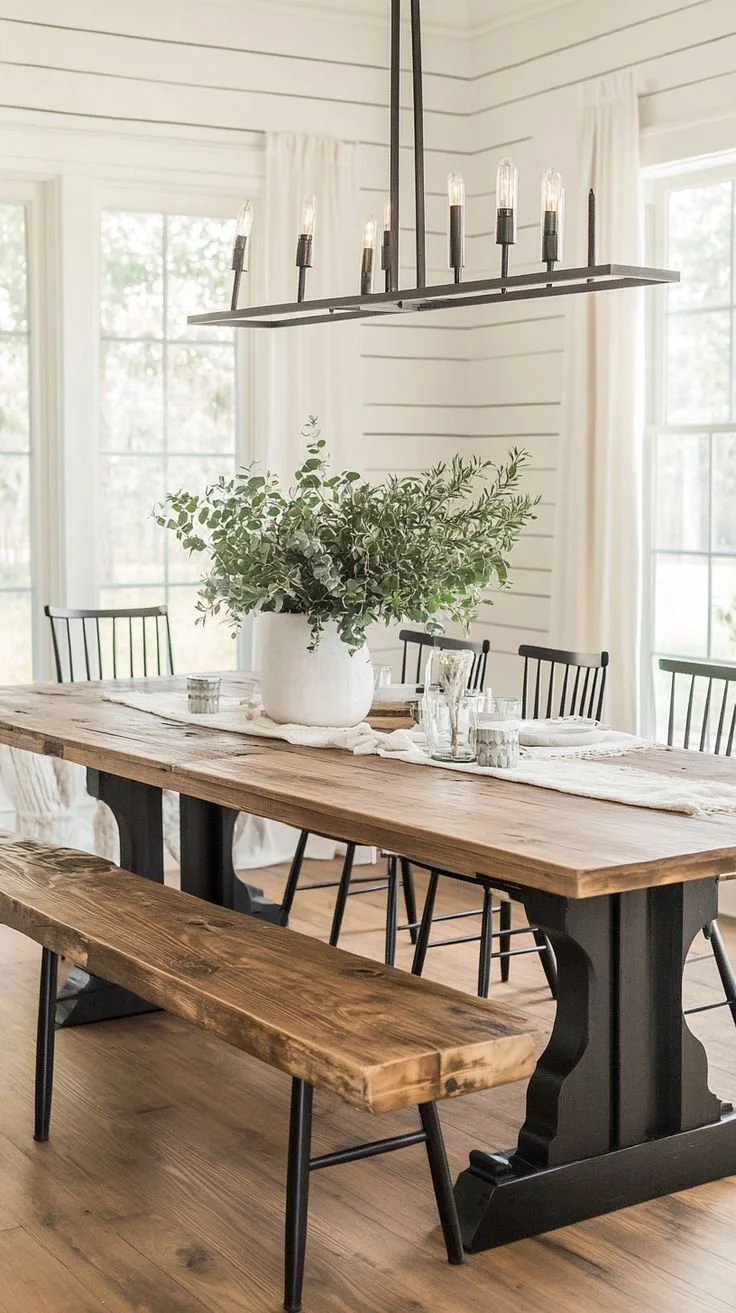
These two styles are practically siblings. Both lean on natural materials, honest construction, and a little bit of patina. A reclaimed wood dining table with black metal pendant lights overhead. Exposed brick walls softened by a chunky wool throw. Iron pipe shelving stacked with stoneware and antique books.
The common thread here is almost always color — both styles live comfortably in warm browns, blacks, rust, and cream. Add too much polished chrome or pastel and the whole thing collapses.
3. Traditional + Modern
Traditional wants symmetry, ornament, and rich color. Modern wants restraint, function, and breathing room. Together they balance each other beautifully — the modern pieces stop the traditional ones from feeling stuffy, and the traditional pieces stop the modern ones from feeling cold.
A tufted Chesterfield sofa under a minimalist gallery wall. A formal dining table surrounded by acrylic chairs. An ornate gold mirror in an otherwise plain bathroom. The trick is proportion — usually 70% one style, 30% the other. Equal parts feels confused. A clear majority feels intentional.
4. Boho + Mid-Century Modern
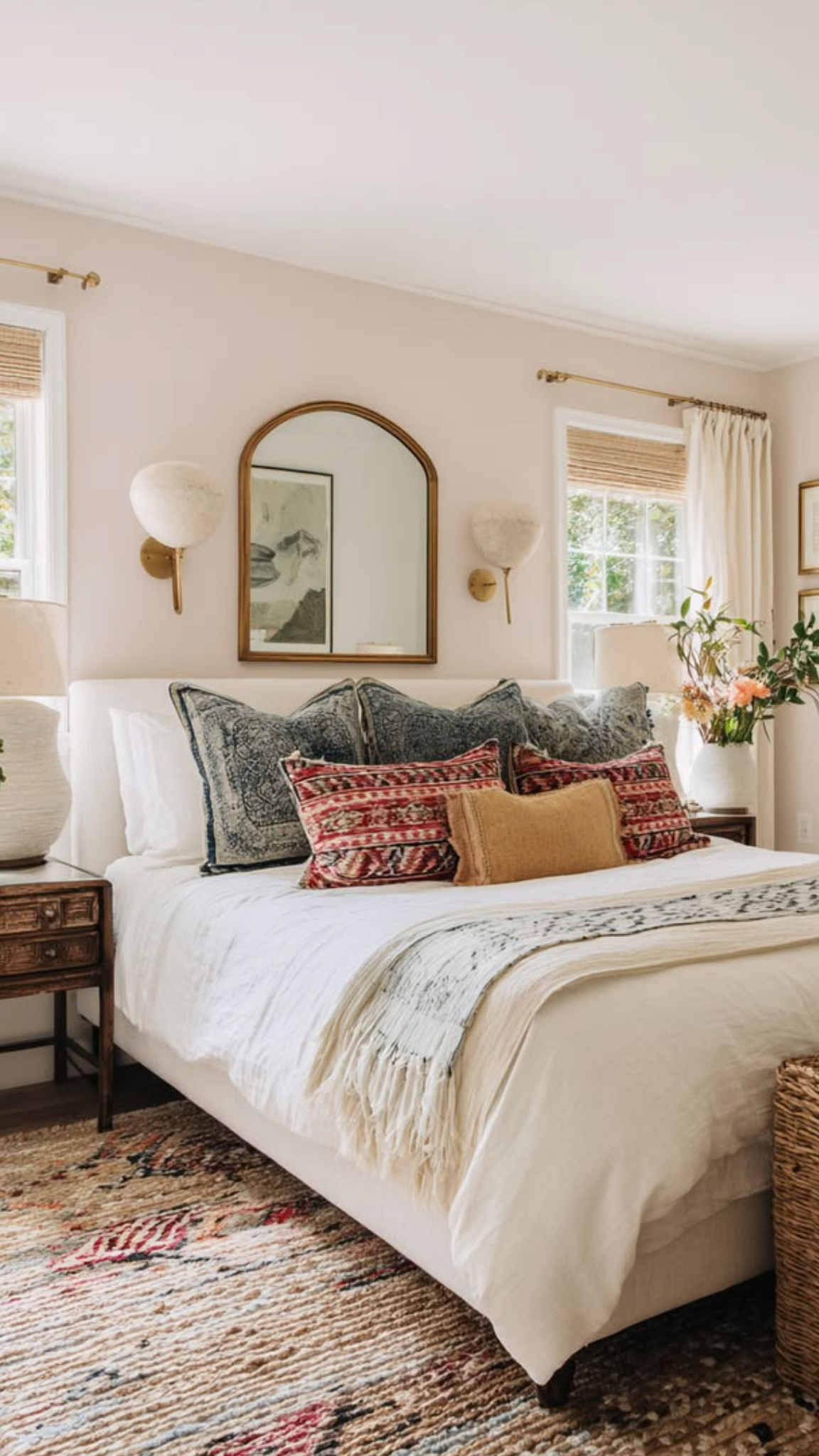
Mid-century gives you the structure: clean lines, tapered legs, geometric forms. Boho gives you the soul: layered textiles, plants, global patterns, warmth. Together they're the most-loved combination on Instagram for a reason — they look effortless and lived-in without being messy.
Anchor the room with a mid-century sofa or credenza. Layer in a vintage kilim rug, hanging plants, a rattan light fixture, and a few macramé or woven wall pieces. The common thread is usually wood tone — keep your warm woods consistent and the rest of the layering reads as intentional.
5. Farmhouse + Modern (sometimes called "Modern Farmhouse")
This pairing has been everywhere for a decade — but the version that actually ages well isn't the one you've seen on TV. It's quieter. Shiplap stays, but it's painted a moody color instead of crisp white. The barn door gets replaced with a clean steel-framed glass door. The galvanized everything stays in the cabinet.
The common thread is simplicity of form — both farmhouse and modern lean toward straight lines and unfussy shapes. Add too much ornament from either side and the balance breaks.
The Mistakes I See Most Often
Mixing styles isn't hard. Mixing them poorly is what creates the rooms people love to hate. Here's where most people slip up.
Too many statement pieces in one room. A bold sofa, a bold rug, a bold chandelier, a bold piece of art, and a bold accent wall is not five strong choices — it's five things fighting for attention. Pick one or two heroes per room. Let the rest support them.
No repetition. This is the most common mistake. Someone mixes a modern lamp, a vintage chair, a boho rug, an industrial coffee table, and a traditional sofa — and wonders why it doesn't feel right. There's nothing repeating. Nothing tying it together. Add a metal finish that shows up three places, or a color that ties two pieces back to a third, and suddenly it works.
Ignoring scale. A delicate antique writing desk next to a chunky modern sectional looks like the desk wandered in by mistake. When you mix styles, your scale and visual weight need to balance even when your styles don't.
Forcing a "theme." The fastest way to ruin a mixed room is to over-commit to a label. The second a space feels like "Industrial Loft" or "Modern Farmhouse" instead of just your home, it's gone too far. Mix freely. Resist the urge to name it.
How to Actually Start (Without Buying Anything)
If you're staring at your living room right now wondering how to apply any of this, here's where I'd start. Walk through the room and answer three questions:
What's the one piece you absolutely love and want to keep? That piece is your anchor. Every other choice gets made around it.
What's one thing in this room from a totally different style than your anchor? That's your contrast. If you don't have one, that's why the room feels flat.
What's repeating? Look for color, metal finish, wood tone, shape. If nothing is, that's your next move — pick one element and add it in two more places.
You don't need to start over. You need to edit. Most rooms aren't missing pieces. They're missing relationships between the pieces already there.
A Final Thought
The best-dressed rooms, like the best-dressed people, look like they didn't try too hard. There's a vintage piece next to something brand new. A formal element softened by something casual. A polished surface near something raw.
That's not luck. That's the practice of mixing — slowly, on purpose, with one common thread holding it all together.
If your room feels boring, mix more. If it feels chaotic, repeat more. The whole craft is right there in those two sentences.