
Designing a home workspace isn’t just about fitting a desk into a spare room. A home workspace is the physical environment where your daily habits, focus patterns, and long-term ambitions intersect. For people who want to design a home workspace, the goal isn’t only efficiency — it’s sustainability. The right setup can quietly reinforce discipline, creativity, and progress over years.
A Quick Overview Before You Rearrange Anything
A well-designed home workspace should:
● Reduce friction (fewer distractions, fewer decision points)
● Support physical comfort for long sessions
● Reinforce your identity and long-term goals
● Make deep focus easier than shallow scrolling
● Encourage consistent daily habits
In short: your environment should make the right actions easier and the wrong ones harder.
Why Your Layout Is a Silent Productivity Tool
Most people underestimate layout. They place a desk where it fits, not where it works best.
Problem: Cluttered or poorly positioned spaces fragment attention.
Solution:Create zones with intentional boundaries.
Result: Your brain associates the space with focused work instead of multitasking.
Consider:
Position your desk to face a wall or window rather than a doorway if foot traffic distracts you.
Keep non-work items out of arm’s reach.
Separate “deep work” and “admin” zones if possible (even if it’s just switching chairs).
Even in a small apartment, subtle separation — a rug, a bookshelf divider, or lighting shift — signals to your brain that this area has a purpose.
Lighting: The Overlooked Performance Lever
Lighting affects alertness, mood, and even how long you can maintain concentration.
Natural light is ideal. Position your desk perpendicular to a window to avoid glare. If natural light is limited:
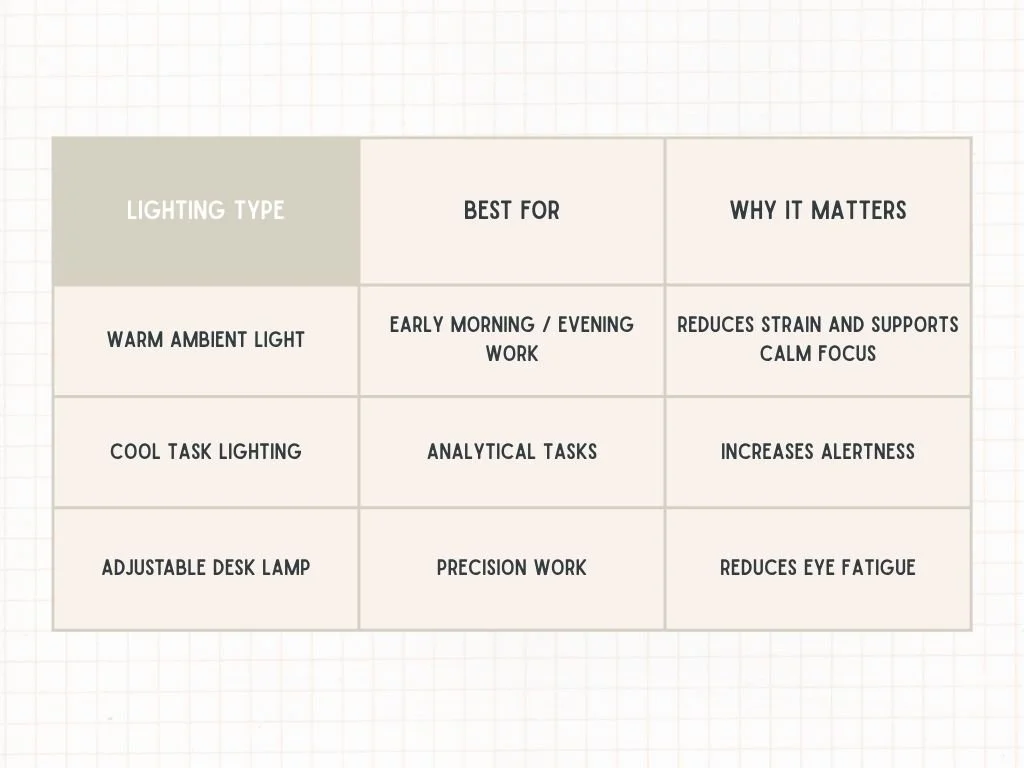
Good lighting reduces micro-fatigue — the subtle strain that drains energy over time.
Organization That Reduces Mental Load
Clutter isn’t just visual noise; it’s cognitive noise.
A productive workspace doesn’t mean empty. It means intentional.
Use one simple rule: Every visible item should earn its place.
Frequently used tools stay within reach.
Reference materials are stored vertically.
Paper gets a single designated tray.
The less time you spend looking for things, the more time you spend building momentum.
Comfort Is Not a Luxury — It’s a Consistency Tool
An uncomfortable chair quietly limits your ambition.
When your body resists staying seated, your goals suffer. Ergonomic support increases endurance, which increases output over months and years.
Minimum essentials:
Adjustable chair with lumbar support
Desk at elbow height
Monitor at eye level
Foot support if needed
Comfort supports habit formation. If the space feels good, you’ll return to it willingly.
Designing for Long-Term Growth, Not Just Daily Tasks
More people are using their home workspace for more than email and meetings. Many are investing in career development, certifications, or advanced study alongside their regular work. A dedicated, distraction-free setup makes it easier to maintain focus beyond immediate deadlines and stick to long-term ambitions.
For example, someone balancing a job with continued education might structure evenings around structured learning sessions. Flexible options like online business degree programs can fit naturally into a well-designed home routine, allowing steady progress without commuting or major schedule disruptions. When your workspace is built for consistency, professional growth becomes part of your rhythm rather than a separate, exhausting effort.
Your environment either reinforces your long-term identity — or it quietly undermines it.
A Practical Setup Checklist
Use this checklist before declaring your workspace “finished”:
Workspace Design Checklist
☐ Is your desk positioned to minimize distractions?
☐ Do you have both ambient and task lighting?
☐ Are daily tools accessible without clutter?
☐ Is your chair supportive for 2+ hours at a time?
☐ Does the space reflect your long-term goals (books, certifications, visual cues)?
☐ Are digital distractions limited (notifications off, separate browser profiles)?
☐ Is there a defined start and shutdown routine?
If you can check these boxes, your space is likely supporting both focus and follow-through.
The Psychology of Habit Reinforcement
Your workspace becomes a cue.
When you enter it consistently at the same time each day, your brain learns the pattern: This is where focused effort happens. Over time, resistance drops.
Small environmental cues can strengthen this:
A notebook placed open before you leave
A whiteboard listing weekly priorities
A visible calendar tracking streaks
A simple morning reset routine
The goal isn’t perfection. It’s continuity.
A Helpful Resource for Planning
If you're starting from scratch or redesigning an existing area, the IKEA Home Workspace Guide offers practical layout examples and ergonomic suggestions.
Even if you don’t purchase anything, reviewing visual layouts can help you rethink space usage and storage strategies.
Frequently Asked Questions
How much space do I really need for a productive home workspace?
You need less square footage than you think. Even a 3–4 foot desk area can work if distractions are minimized and storage is vertical. Separation and intention matter more than size.
Should my workspace be in a separate room?
If possible, yes. But if not, visual boundaries (screens, shelving, lighting changes) can create psychological separation that’s nearly as effective.
What’s more important: aesthetics or ergonomics?
Ergonomics first. A beautiful but uncomfortable space will limit your ability to stay consistent. Once comfort is secured, aesthetics can reinforce motivation.
How often should I reorganize?
Quarterly reviews are ideal. As goals evolve, your workspace should adapt to reflect new priorities.
A home workspace is more than furniture — it’s an accountability system. Layout shapes focus. Lighting affects energy. Organization reduces friction. Comfort sustains effort. When designed intentionally, your workspace becomes a quiet partner in your long-term growth.
Design it once with care, and it will support you every day after.