
Essential Oils for Summer: Your Complete Guide to Cooling Blends, Bug-Bite Relief, and Warm-Weather Wellness
Summer has a way of making everything feel more alive — longer days, bare feet on the porch, dinner outside as the light goes gold. But it also brings its own set of small annoyances: sticky heat, mosquito bites, sunburned shoulders, and that overheated, sluggish feeling by mid-afternoon. This is where essential oils earn their keep. Used thoughtfully, they can help you stay cool, keep bugs at bay, and bring a little extra ease to the season — all without reaching for anything synthetic.
This guide walks through everything I use essential oils for once the weather turns warm: the oils worth keeping on hand, the blends I make on repeat, and the safety basics that make sure you're using them well.
Why Reach for Essential Oils in Summer?
Essential oils are concentrated plant extracts, and different oils bring different properties to the table. Some, like peppermint, have a genuine cooling sensation on skin. Others, like citronella and lemongrass, are naturally disliked by mosquitoes and other biting insects. And a few, like lavender and tea tree, are known for calming irritated, itchy skin.
None of this replaces sunscreen, hydration, or a good fan — but as a layer on top of your usual summer routine, essential oils can make a noticeable difference in comfort.
The Core Lineup: Oils Worth Having on Hand
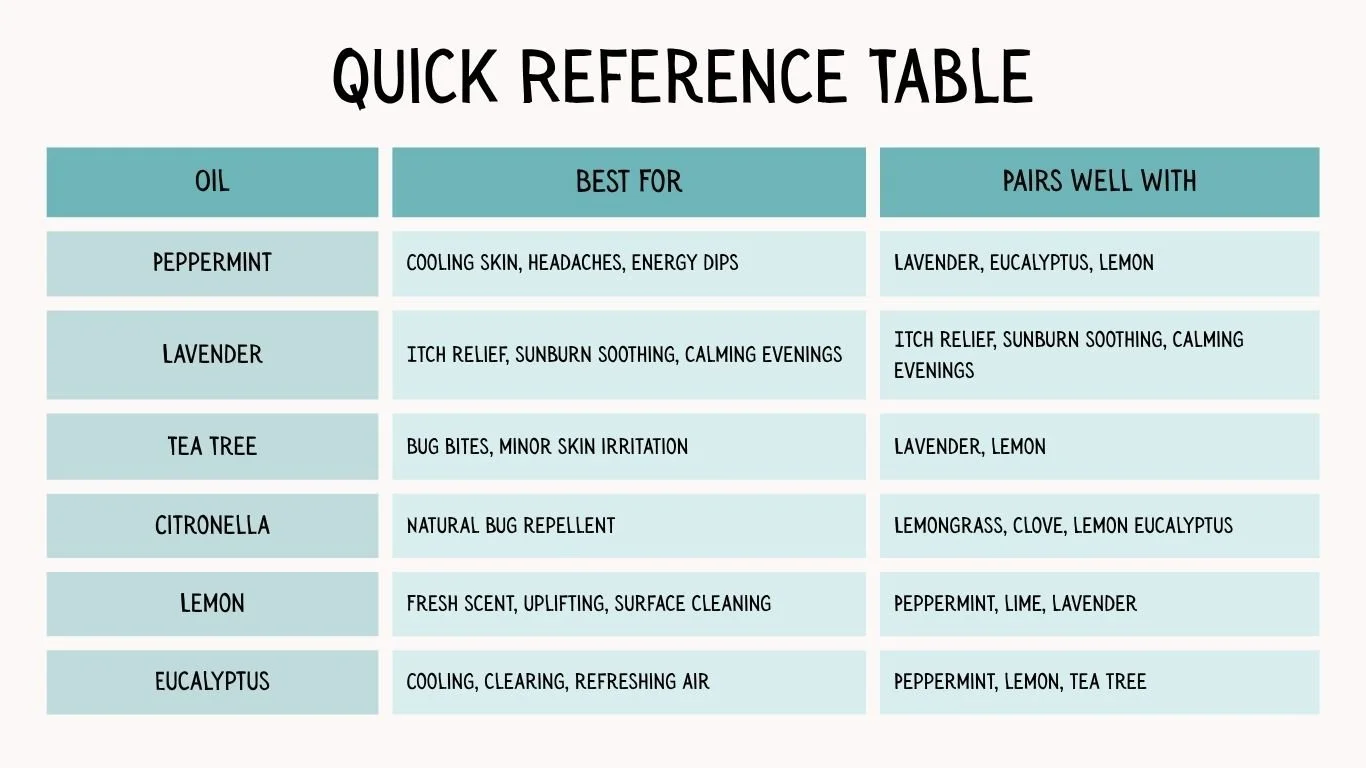
Before getting into specific recipes, it helps to know which oils do the heavy lifting during summer months.
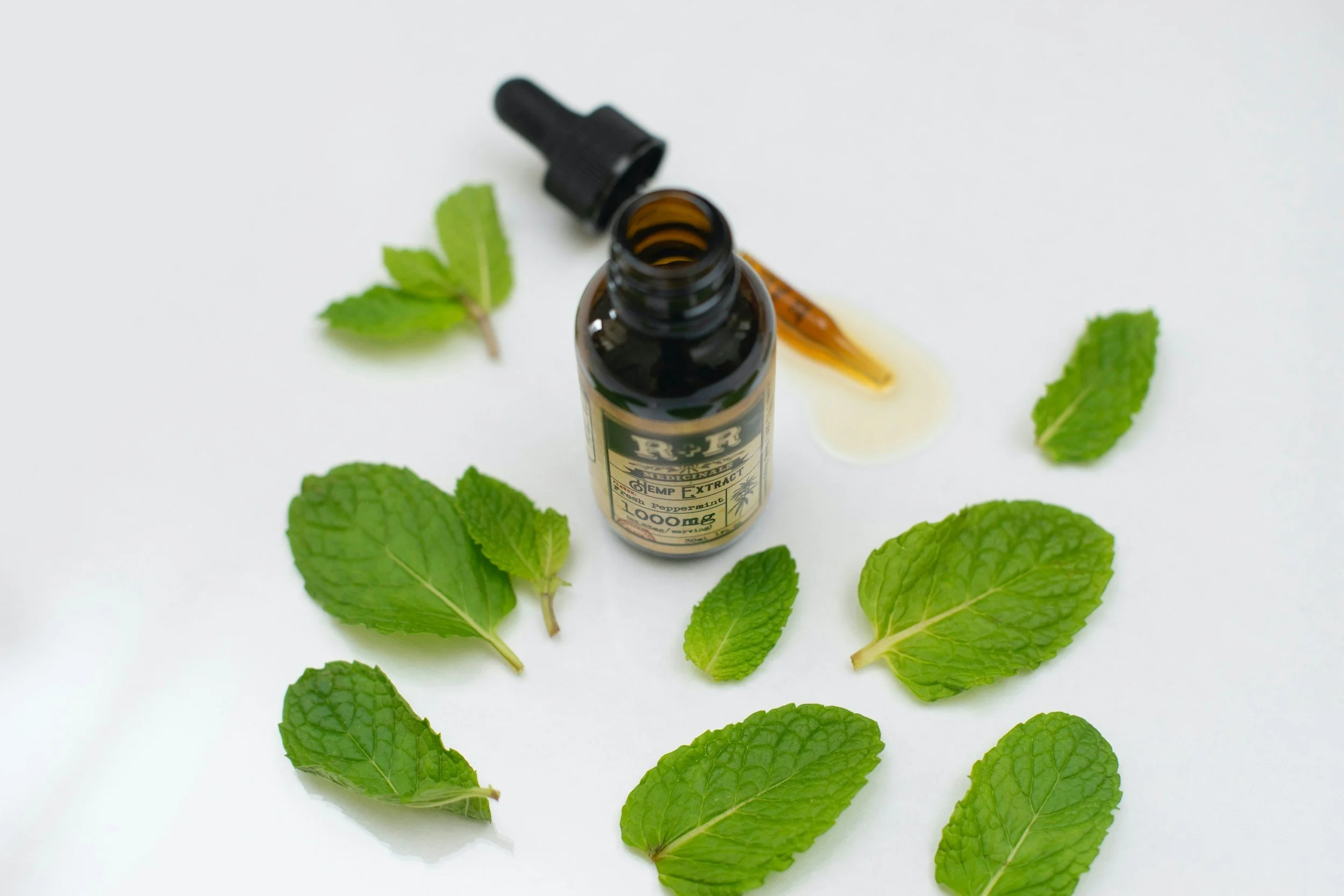
Peppermint. The single most useful oil for hot weather. It contains menthol, which triggers a genuine cooling sensation when applied to skin (even though it doesn't actually lower your temperature). Diluted peppermint oil on the back of the neck or wrists can make a sweltering afternoon feel more bearable.
Lavender. The gentle all-rounder. Lavender soothes irritated skin, calms itching, and is mild enough to use on children (in appropriate dilutions). It also just smells like summer evenings.
Tea Tree. Known for its skin-calming, cleansing properties. It's especially good paired with lavender for bug bites, cuts, or minor irritation from time spent outdoors.
Citronella. The classic bug-repellent oil. It won't outperform DEET for serious mosquito territory, but for a backyard dinner or porch evening, it does real work — especially diffused or sprayed on clothing.
Lemongrass. Another insect-deterring oil, often paired with citronella. It has a bright, citrusy scent that also just feels appropriate for the season.
Lemon Eucalyptus. A stronger, more clinical-smelling repellent oil. Note: this is different from regular eucalyptus, and it's the one with the most research behind it as a natural repellent.
Eucalyptus. Cooling and clearing, great for freshening up a room or a fan-cooled space, though it's not recommended for young children.
Roman Chamomile. Gentle and calming, especially nice paired into after-bite or after-sun blends.

Cooling Blends for Hot Days
Chill-Out Roller
Combine 4 drops peppermint, 4 drops spearmint, and 2 drops lavender in a 10ml roller bottle, then top off with a carrier oil like fractionated coconut oil. Roll onto the back of the neck, wrists, and temples whenever the heat starts to feel like too much. This is the one I reach for most — it's subtle, portable, and works fast.
Frosty Room Spray
In a 4oz spray bottle, combine 10 drops peppermint, 10 drops eucalyptus, and 6 drops lemon with water and a splash of witch hazel (to help the oils disperse). Shake before each use and mist over bedding, curtains, or into the air of a stuffy room. It won't replace air conditioning, but it makes a warm room feel noticeably fresher.
Cool-Down Bath Soak
Stir 3 drops peppermint and 3 drops lavender into a cup of Epsom salt, then add to a lukewarm (not hot) bath. This is a nice way to wind down after a long day outside — it eases achy legs from yard work or a long hike and helps your body temperature settle before bed.
Sunny Day Diffuser Blend
Add 3 drops lemon, 3 drops peppermint, and 2 drops lime to your diffuser. It's bright and energizing without being overwhelming — good for a porch, sunroom, or any space that gets a lot of natural light.
How to Use Essential Oils Safely
A few ground rules make all the difference:
Always dilute. Essential oils are potent and should never be applied directly ("neat") to skin without a carrier oil like fractionated coconut oil, jojoba, or sweet almond oil. A general dilution guideline for adults is around 2-3% oil to carrier (roughly 10-15 drops per ounce of carrier).
Patch test first. Apply a small diluted amount to your inner forearm and wait 24 hours before using a new oil more broadly, especially on sensitive skin.
Be extra careful with kids. Peppermint and eucalyptus are generally not recommended for children under 6, since they can affect breathing in young children. Lavender and chamomile are gentler, better options for little ones.
Keep oils away from eyes, mucous membranes, and pets. Cats in particular can be sensitive to many essential oils, so diffuse in well-ventilated areas if you share your home with one.
Sun sensitivity matters. Citrus oils like lemon and lime can increase photosensitivity. Avoid applying them to skin that will be in direct sun for several hours afterward.
This is general wellness information, not medical advice. If you have a medical condition, are pregnant, or are unsure how a particular oil interacts with a medication, check with your doctor before using essential oils topically.
Building Your Own Summer Oil Kit
If you're just getting started, you don't need a huge collection. A solid, budget-friendly summer starter kit looks like this:
Peppermint
Lavender
Tea Tree
Citronella (or a citronella + lemongrass blend)
Lemon
With just these five oils, you can make nearly every blend in this guide — cooling rollers, bug sprays, after-bite relief, and a refreshing room spray — and still have room to experiment with your own combinations as you find what you like.
A Season Made a Little Easier
Summer doesn't need to mean sticky discomfort and swatting at mosquitoes all evening. With a handful of oils and a few simple blends, you can keep your home, your skin, and your evenings on the porch feeling just a little more comfortable — naturally.
This post is for general wellness purposes and is not a substitute for medical advice.